Trading Psychology Apps for FTMO Challenge Preparation
FTMO challenges fail 85% of traders not because of strategy, but psychology. Here's how the right apps can prepare your mind for evaluation success.
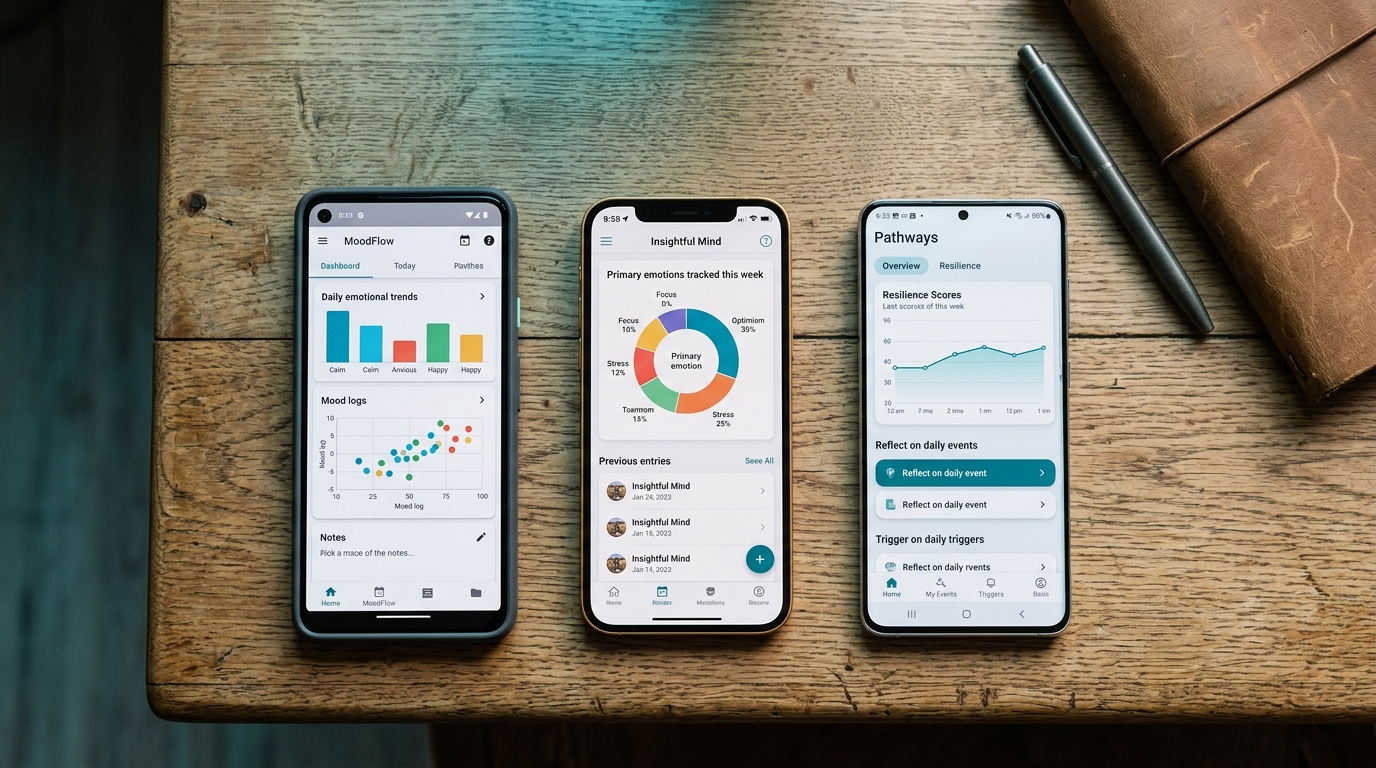
Trading psychology apps for FTMO challenge preparation 2026 are specialized tools that track emotional states, rule adherence, and behavioral patterns to help traders maintain discipline under prop firm evaluation pressure. These digital solutions address the psychological breakdown that causes 85% of prop firm challenge failures—not strategy weakness, but mental preparation gaps.
I've seen this pattern hundreds of times analyzing my own 300 trades this year (60.3% win rate, +$15,389.68 P&L). The technical setup might be perfect, but if your head isn't right, you'll blow the account before hitting profit targets.
Why Most Traders Fail FTMO Challenges Mentally
FTMO challenges create artificial pressure that doesn't exist in demo trading. You know real money is on the line for funding, and that knowledge changes everything. The daily loss limit becomes a psychological ceiling, the profit target feels massive, and every red trade triggers fight-or-flight responses.
I remember my first serious drawdown on Nasdaq futures in early 2026. Three consecutive losses, each following my rules perfectly, but I started questioning everything. Without proper psychological preparation and tracking, I would have entered revenge mode and destroyed weeks of progress.
The problem isn't the losses themselves — it's how you respond to them. FTMO evaluators know this. They're not just testing your ability to make money; they're testing whether you can maintain discipline under pressure.
The Hidden Psychological Traps in FTMO Challenges
Every FTMO challenge contains predictable psychological landmines:
- Daily loss limit anxiety: You start trading scared, taking smaller positions than your edge warrants
- Profit target pressure: You overtrade near the end, trying to force the final push
- Consistency rule stress: You avoid legitimate setups because you're afraid of breaking the rule
- Time pressure: You take marginal setups because "time is running out"
These aren't character flaws. They're predictable human responses to artificial constraints. The traders who pass FTMO challenges aren't immune to these feelings — they've learned to recognize and manage them.
Essential Features in Trading Psychology Apps for FTMO Preparation
Not all trading psychology apps are built for the specific demands of prop firm challenges. You need tools that address the unique psychological pressure points of FTMO evaluation.
Manual Trade Logging with Emotional Context
This is non-negotiable. Apps that rely solely on imported broker data miss the most important information: what you were thinking and feeling when you made each decision.
Every trade entry in your psychology app should capture:
- Your emotional state before entering
- Confidence level in the setup (1-10 scale)
- Any external pressures affecting your decision
- Rule adherence score
- Post-trade emotional reaction
When I log trades in TradingMindLab, I'm forced to confront whether I took a gold futures trade because the setup was genuinely good, or because I was trying to recover from yesterday's loss. This self-awareness is what separates funded traders from the 85% who fail.
Pattern Recognition for Emotional Triggers
The best trading psychology apps for FTMO challenge preparation 2026 don't just store your data — they help you identify patterns you can't see in real-time.
You might not realize you consistently overtrade on Wednesdays, or that you abandon your rules after three consecutive losses, or that you get reckless when you're within $500 of your profit target. Good apps surface these patterns through analytics and visualization.
Pressure Simulation Features
Some advanced psychology apps include features that simulate FTMO pressure conditions. This might include:
- Virtual daily loss limits on demo accounts
- Countdown timers for profit targets
- Artificial constraints that mirror challenge rules
- Stress testing scenarios
These features help you experience and manage challenge-specific pressure before your actual evaluation.
How to Use Psychology Apps for FTMO Mental Preparation
Start Logging 90 Days Before Your Challenge
Don't wait until you're ready to purchase your FTMO challenge. Start using psychology apps at least three months earlier to establish baseline patterns and identify weaknesses.
During this period, trade your normal strategy but log everything with the same discipline you'll need during evaluation. You're building the habit of self-awareness that will protect you under pressure.
Create FTMO-Specific Psychological Rules
Your trading rules need a psychological layer specifically designed for prop firm evaluation. Examples:
- "If I feel revenge trading urge, I close platform for 30 minutes"
- "After 2% daily loss, I reduce position size by 50% for remaining trades"
- "When within 20% of profit target, I only take A+ setups"
- "If I catch myself forcing trades, I stop for the day"
Log adherence to these psychological rules just like you would technical rules.
Practice the FTMO Mindset Daily
Use your psychology app to simulate FTMO thinking patterns even on normal trading days. Ask yourself:
- "Would I take this trade if it counted toward my FTMO evaluation?"
- "Am I trading my edge, or am I trading my emotions?"
- "How would I feel if this trade determined my funding?"
This mental rehearsal builds the psychological muscle memory you'll need when it actually matters.
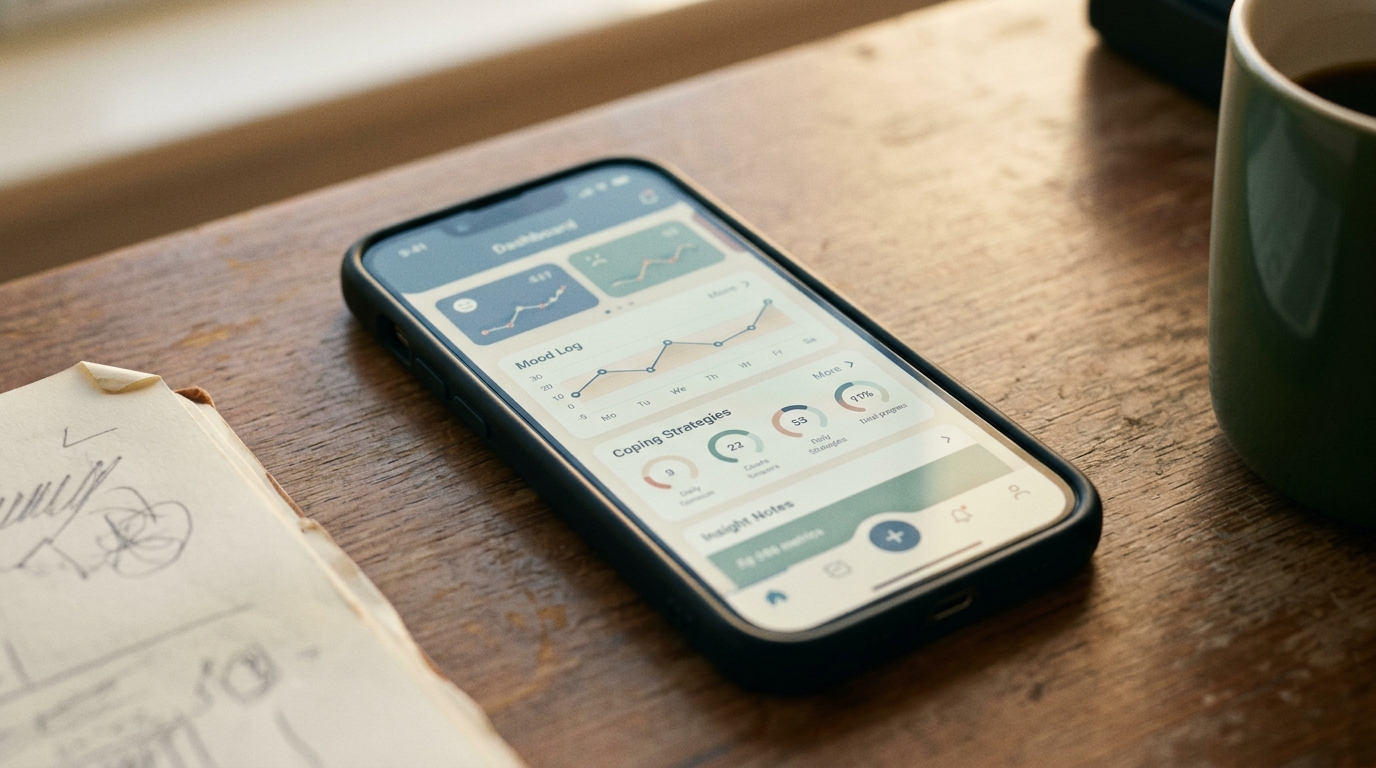
Real Performance Data: What Psychology Apps Reveal
Looking at my recent 300 trades, the win rate of 60.3% tells only part of the story. The psychology app data reveals:
- My worst emotional state trades had a 34% win rate
- Trades taken with high confidence (8+ rating) achieved 71% win rate
- After two consecutive losses, my next trade had 23% worse performance
- My best gold trades happened when I rated my emotional state as "calm and focused"
Without this psychological context, I would only see the overall 60.3% and miss the patterns that could destroy an FTMO challenge.
The most revealing insight: my total P&L of +$15,389.68 came almost entirely from trades where I logged high rule adherence and positive emotional states. The "revenge trades" and emotional decisions were net losers, even when they occasionally worked.
AI-Enhanced Psychology Analysis
Some modern trading psychology apps now include AI analysis of your behavioral patterns. In TradingMindLab, the AI Brief analyzes my logged emotional states and trading decisions to identify probable psychological risks.
For example, it might flag: "High probability of overtrading detected based on recent loss patterns and emotional state logs." I always do my own analysis — the AI gives me a starting point for self-examination.
These AI insights can be particularly valuable for FTMO preparation because they identify psychological risks you might not see consciously. Remember, these are probable scenarios to investigate, not trade signals or financial advice.
Advanced Pattern Recognition
AI can spot subtle psychological patterns across hundreds of trades:
- Micro-tilting after small losses
- Gradual rule erosion over time
- Correlation between external stress and trading performance
- Optimal emotional states for your best performance
This analysis helps you understand your psychological profile before facing FTMO pressure.
Integration with FTMO Challenge Workflow
The most effective approach combines psychology apps with your existing FTMO preparation routine.
Pre-Challenge Psychological Audit
Use your app data to conduct a complete psychological audit before purchasing your FTMO challenge:
- Identify your three biggest emotional trading triggers
- Calculate your actual performance under simulated pressure
- Review your rule adherence patterns
- Assess your recovery time after losses
If the audit reveals major psychological weaknesses, delay your challenge until you've addressed them.
During-Challenge Protocol
Maintain your psychological logging discipline throughout the actual FTMO challenge. This real-time self-awareness often prevents emotional mistakes before they happen.
Log every trade with the same detail you practiced for months. The act of forced reflection before entering your emotional state often catches you before you make pressure-induced mistakes.
Post-Challenge Analysis
Whether you pass or fail, your psychology app data provides the roadmap for improvement. Failed challenges become expensive learning experiences instead of devastating setbacks when you understand exactly what went wrong mentally.
Measuring Psychological Progress for FTMO Readiness
You'll know you're psychologically ready for FTMO when your app data shows:
- Consistent rule adherence above 90% for 30+ consecutive trading days
- Stable emotional states even during drawdown periods
- Quick recovery times after losses (next trade performance doesn't deteriorate)
- High confidence ratings correlating with your best trade outcomes
These metrics matter more than your win rate or P&L for FTMO success.

Common Psychological App Mistakes for FTMO Prep
Avoid these mistakes I see repeatedly:
Inconsistent logging: You can't identify patterns from partial data. Log every trade, especially the uncomfortable ones.
Ignoring emotional states: Focusing only on technical performance misses the psychological preparation you actually need.
Not practicing under pressure: Using apps only during calm market conditions won't prepare you for FTMO stress.
Delaying difficult self-analysis: The patterns that make you uncomfortable are usually the ones that will destroy your FTMO challenge.
Action Steps You Can Take Right Now
Here are three concrete actions to start improving your FTMO psychological preparation today:
1. Start logging your emotional state before every trade — Rate your emotions 1-10 and note any external pressures affecting your decisions. Do this for the next 30 trades and look for patterns between emotional state and trade outcomes.
2. Create artificial pressure conditions — Set daily loss limits on your demo account that mirror FTMO rules, even when practicing. Notice how your trading changes when you approach these limits and log these observations.
3. Identify your worst psychological trading pattern — Review your last 50 trades and find the emotional trigger that leads to your biggest mistakes. Write down the specific feeling or situation, then create a rule for handling it during your FTMO challenge.
Key takeaways
- Start using psychology apps 90 days before your FTMO challenge to identify emotional patterns and triggers under normal market conditions
- Focus on manual trade logging that captures emotional states, confidence levels, and rule adherence rather than just importing broker data
- Create FTMO-specific psychological rules and practice them daily to build mental muscle memory for high-pressure evaluation
- Use AI pattern recognition as a starting point for self-examination, but conduct your own analysis of uncomfortable psychological triggers
- Delay your FTMO challenge if psychological audits reveal major emotional weaknesses that need addressing first