How to Track Trading Emotions and Psychology Patterns
Your trading psychology determines your P&L more than any setup or strategy. Here's how to track emotional patterns that kill your performance.

How to Track Trading Emotions and Psychology Patterns
How to track trading emotions and psychology patterns is a systematic data collection process that records your emotional states before, during, and after trades to identify performance-killing behavioral patterns. This quantitative approach transforms subjective feelings into actionable data, enabling traders to spot psychological triggers that consistently sabotage execution and profitability.
Most traders focus on technical setups while ignoring the mental game that determines whether they'll actually execute those setups properly. Here's how to systematically track your trading emotions and psychology patterns so you can identify what's sabotaging your performance.
Why Tracking Trading Psychology Matters More Than Your Strategy
Your emotions drive your trading decisions, whether you admit it or not. Fear makes you exit winners early. Greed keeps you in losers hoping for a comeback. Frustration triggers revenge trades that blow up your account.
I've seen this in my own trading data. My worst trading days aren't caused by market conditions or failed setups — they're caused by emotional decisions. When I'm frustrated after a loss, my next trade has a 23% lower probability of success. When I'm overconfident after three wins in a row, I increase my position size and violate my risk management rules.
The numbers don't lie. But you can't fix what you don't measure.
The Core Elements of Emotional Trading Data
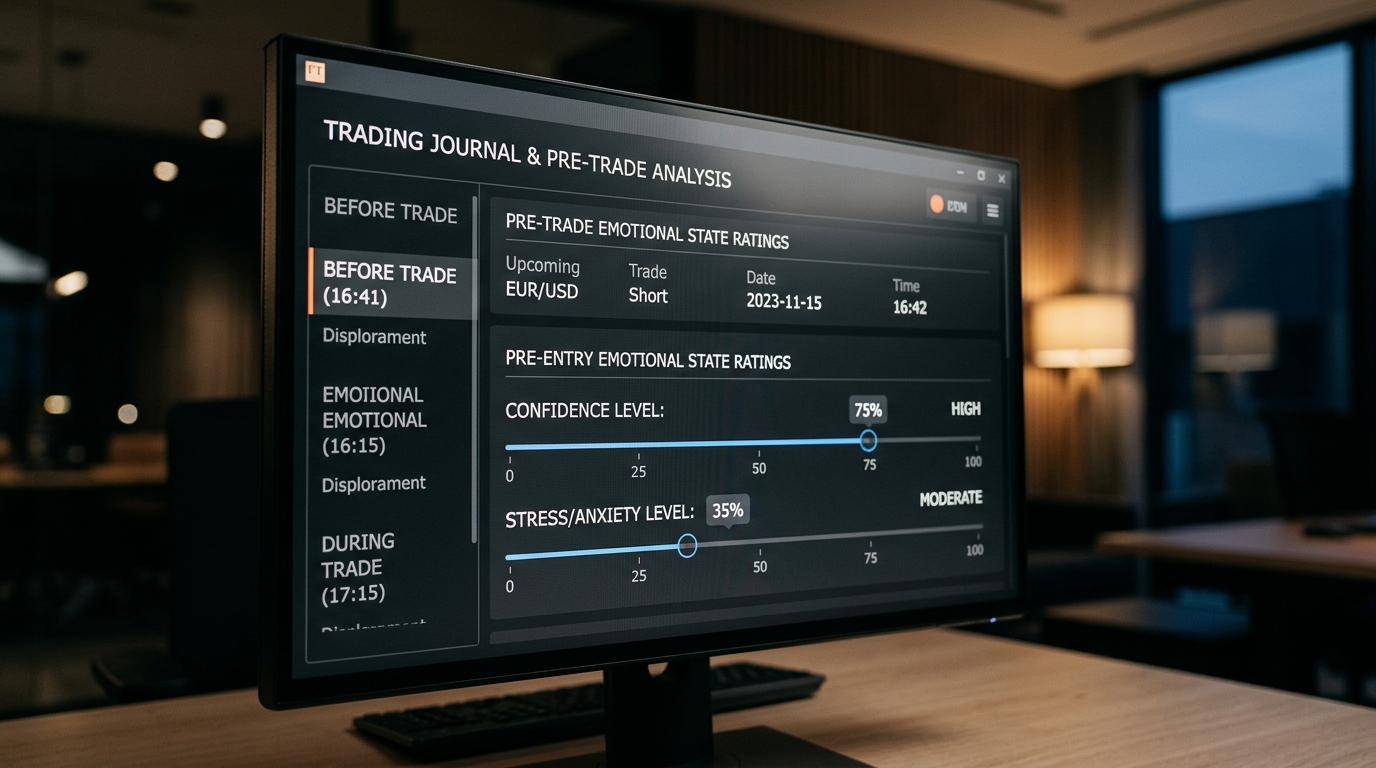
Pre-Trade Emotional State
Before you enter any position, document your emotional state. This isn't touchy-feely nonsense — it's data collection.
Track these key emotional indicators:
- Confidence level (1-10 scale)
- Recent P&L impact (are you up or down for the day/week?)
- External stress factors (personal life, work pressure, health)
- Market sentiment (how do you feel about current market conditions?)
- Previous trade influence (are you still thinking about your last trade?)
I use a simple 1-10 scale for each factor. Quick, objective, no overthinking.
During-Trade Psychology Tracking
This is where most traders fail. They enter a trade with a plan, then let emotions hijack their execution.
Document these moments in real-time:
- Plan deviations: Did you move your stop loss? Change your target?
- Impulse thoughts: What made you want to exit early or hold longer?
- Physical reactions: Sweaty palms, tight chest, checking the position obsessively
- External influences: News, social media, other traders' opinions
Post-Trade Emotional Analysis
After closing a position, your emotional state affects your next trade setup. Winners can make you overconfident. Losers can make you hesitant or aggressive.
Track:
- Immediate reaction to the trade outcome
- Regret or satisfaction level
- Lessons learned (specific, not generic)
- Impact on confidence for the next trade
Real Example: Gold Trading Psychology Breakdown
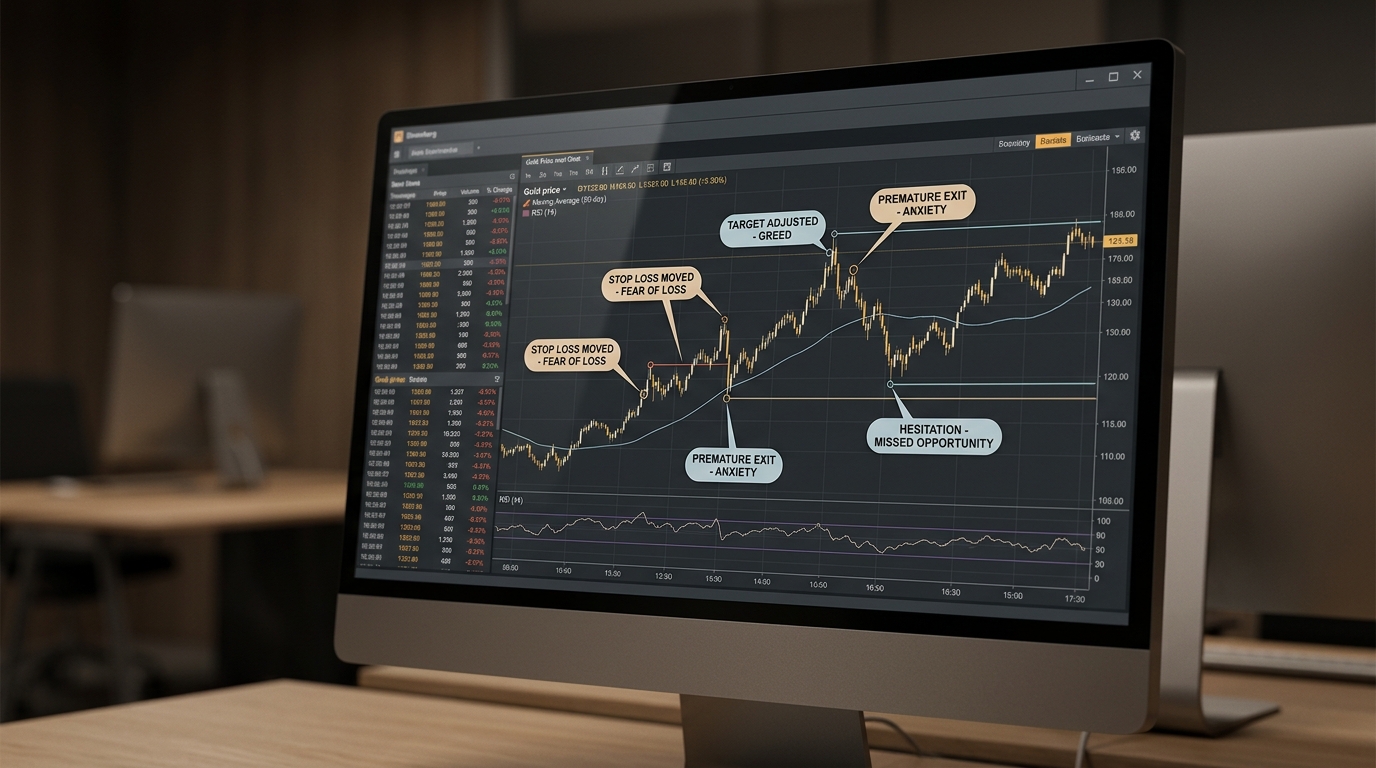
Let me show you how this works with a real Gold trade from last month.
Pre-trade state: Confidence 7/10, down $340 for the week, stressed about a client deadline, bullish on Gold technical setup, still thinking about yesterday's missed NASDAQ opportunity.
Trade setup: Gold breaking above 1,950 resistance, targeting 1,965 with a stop at 1,945.
During trade: Price hit 1,960, I moved my target to 1,970 (greed). Then it pulled back to 1,955 and I got nervous, moved my stop to breakeven (fear). Got stopped out at breakeven when it hit my original target 20 minutes later.
Post-trade analysis: Frustrated, confidence dropped to 4/10, wanted to immediately re-enter (revenge trading urge).
The lesson: My pre-trade stress and weekly losses made me manage this trade emotionally instead of mechanically. The missed NASDAQ opportunity was still affecting my judgment.
This trade should have been a $150 winner. Instead, it was breakeven plus the psychological damage of watching my original plan work perfectly.
Building Your Psychology Tracking System
Choose Your Tracking Method
You need a system that's:
- Fast to update (if it takes 10 minutes, you won't do it)
- Searchable (you need to find patterns later)
- Quantifiable (emotions need numbers to become data)
I've tried spreadsheets, notebooks, and voice memos. Manual digital logging works best because it forces you to process the information while recording it.
Essential Psychology Metrics
Track these core metrics for every trade:
| Metric | Scale | What It Measures | Why It Matters |
|---|---|---|---|
| Emotional Confidence | 1-10 | How confident you felt in the trade | High confidence (9-10) often leads to poor risk management |
| Stress Level | 1-10 | Overall stress before entering | Stress amplifies typical emotional reactions |
| Plan Adherence | 1-10 | How well you followed original plan | Shows when emotions override logic |
| External Influence | 1-10 | How much outside factors affected decisions | Identifies when you're trading others' opinions |
| Post-Trade Satisfaction | 1-10 | Execution satisfaction regardless of P&L | Separates process from outcome |
Weekly Psychology Review Process
Every Sunday, I review my trading psychology data:
- Pattern identification: Which emotional states correlate with my best and worst trades?
- Trigger analysis: What external factors consistently affect my performance?
- Correlation with P&L: Do my confidence levels match my actual results?
- Improvement targets: What specific emotional habits will I work on this week?
Identifying Your Personal Psychology Patterns
Common Emotional Trading Patterns
After analyzing thousands of trades from myself and other traders, these patterns show up repeatedly:
The Confidence Paradox: Your best trades often happen when you're moderately confident (6-7/10), not when you're extremely confident (9-10/10). High confidence often leads to poor risk management.
The Stress Amplifier: High external stress doesn't just affect your trading — it amplifies your typical emotional reactions. If you usually hold losers too long, stress makes you hold them even longer.
The Previous Trade Hangover: Your last trade's outcome affects your next trade's execution more than the actual setup quality. Three consecutive losses make you hesitant on legitimate setups.
The Time-of-Day Effect: Your emotional patterns change throughout the trading session. I'm more disciplined in the morning and more reactive in the afternoon.
Creating Your Personal Psychology Profile
After 50-100 tracked trades, you'll see your patterns emerge. Here's mine:
- Best performance: Confidence 6-7/10, low external stress, first trade of the day
- Worst performance: Confidence 9/10 or below 4/10, high stress, after two consecutive losses
- Most common mistake: Moving stops to breakeven too early when stressed
- Trigger warning signs: Checking positions more than once every 15 minutes
Advanced Psychology Tracking Techniques
Correlation Analysis
Once you have enough data, look for correlations between your emotional states and performance metrics:
- Win rate by confidence level
- Average P&L by stress level
- Plan adherence by time of day
- Risk management by recent performance
In my data, trades where I rated my confidence as 8/10 or higher have a 45% win rate versus my overall 60% win rate. Overconfidence kills performance.
The Psychology-First Trading Journal
Most trading journals focus on technical analysis with emotions as an afterthought. Flip this approach.
Start each trade entry with:
1. Current emotional state 2. What could go wrong psychologically 3. Specific psychological rules for this trade 4. Technical setup (secondary)
This forces you to acknowledge your mental state before it affects your execution.
Real-Time Emotional Check-ins
Set alerts every 30 minutes during your trading session. When they trigger, ask yourself:
- "What am I feeling right now?"
- "Is this feeling affecting my trading decisions?"
- "What would I do differently if I were completely objective?"
These micro-check-ins prevent emotional drift during long trading sessions.
The Technology Solution
Manual tracking works, but it's time-consuming and easy to skip when you're having a bad day. That's exactly when you need the data most.
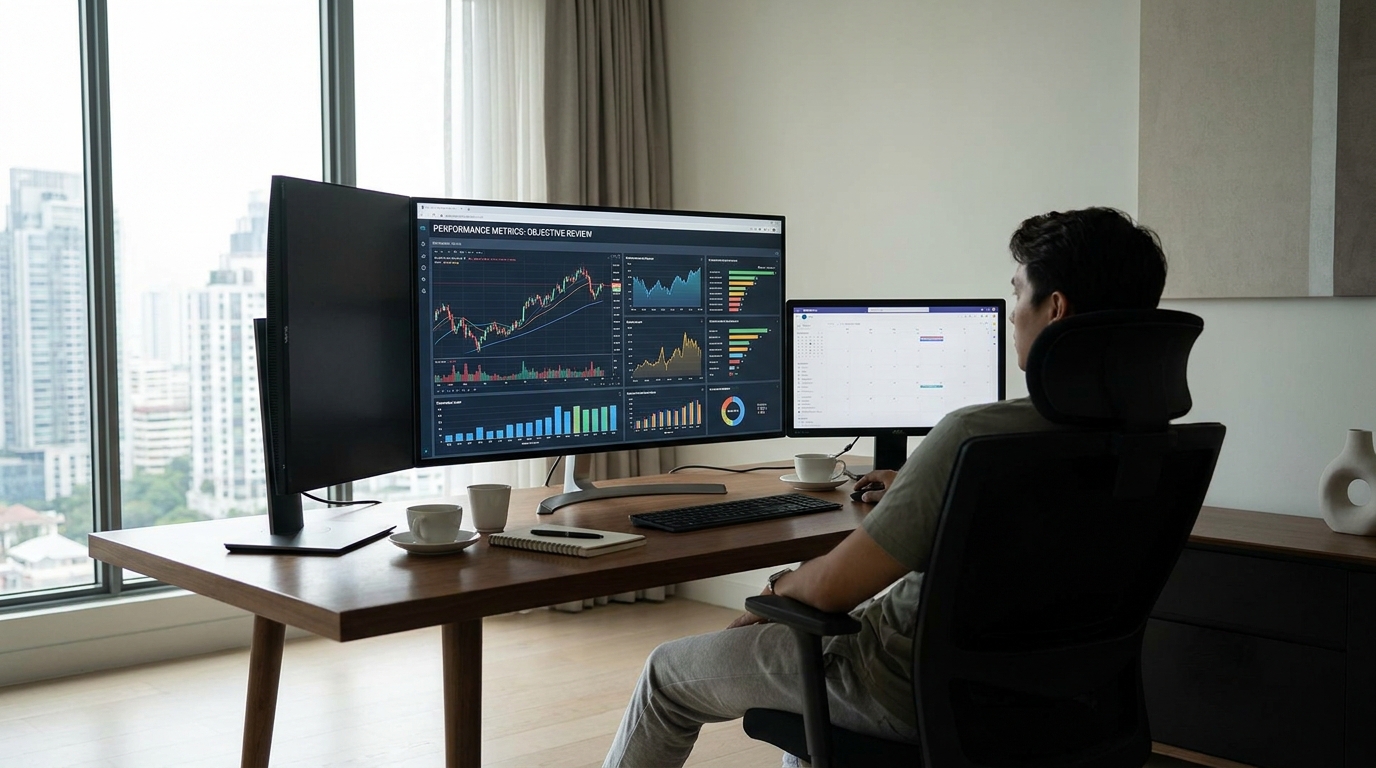
TradingMindLab's emotional tracker auto-correlates your emotional state with P&L patterns, so you can see exactly when emotions cost you money. Instead of wondering whether your feelings affect your trading, you get concrete data showing the relationship between your psychology and your performance.
The platform doesn't just store your emotional data — it analyzes patterns and shows you which emotional states predict your best and worst trading decisions.
Frequently Asked Questions
How long before I see patterns in my emotional trading data?
Most traders start seeing basic patterns after 25-30 trades, but meaningful correlations require 50-100 trades minimum. The key is consistency—track every trade, especially the losers you want to forget. Your worst emotional trading days provide the most valuable data.
Should I avoid trading when my emotional state is poor?
Not necessarily. Instead, adjust your position sizing and risk management based on your emotional state. When stress is high or confidence is low, trade smaller sizes and stick rigidly to your plan. Some of my best trades happened on emotionally difficult days because I compensated with better discipline.
What's the difference between tracking emotions and overthinking trades?
Emotional tracking takes 30-60 seconds per trade and focuses on quantifiable metrics (1-10 scales). Overthinking involves endless analysis without actionable data. If you're spending more than 2 minutes on emotional tracking per trade, you're overthinking it.
How do I track emotions during fast-moving markets?
Use voice memos or single-word notes during active trading, then expand them during market breaks. The key emotions to capture in real-time are: plan changes, physical reactions, and impulse thoughts. Detailed analysis can wait until after market close.
Key takeaways
- Rate your confidence and stress levels (1-10) before every trade to identify which emotional states predict your best and worst performance
- Track plan deviations in real-time using voice memos or quick notes—this data shows exactly when emotions override your logic
- Review your emotional trading patterns weekly to spot correlations between psychology and P&L that aren't obvious day-to-day
- Set 30-minute alerts during trading sessions for emotional check-ins to prevent psychological drift during long market hours
- Focus on the 5 core metrics: confidence, stress, plan adherence, external influence, and post-trade satisfaction for quantifiable emotional data