AI Trading Psychology Coach for Retail Traders 2026: Real Tools
AI psychology coaching for traders isn't about magic algorithms. It's about data-driven emotional pattern recognition that actually helps you trade better.
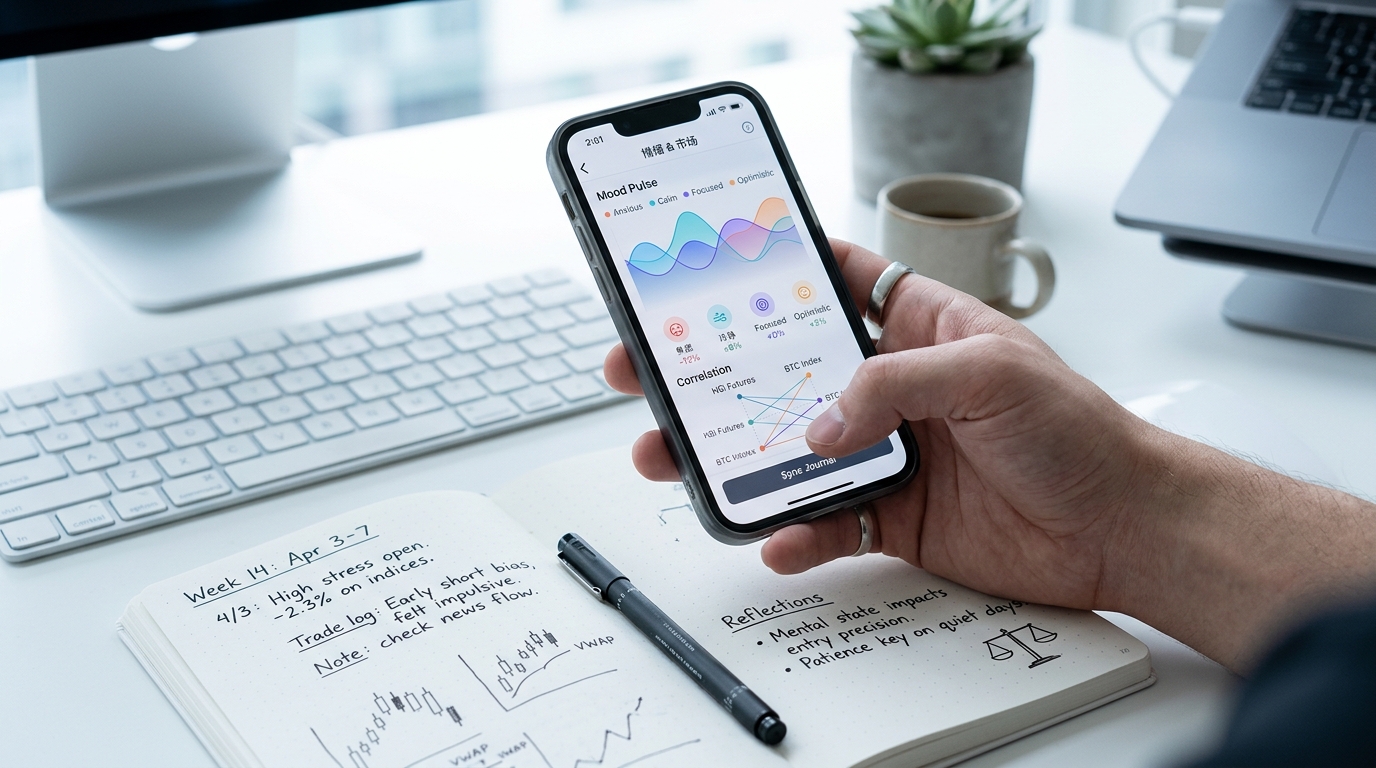
AI trading psychology coach for retail traders 2026 is data-driven emotional pattern recognition that correlates your logged psychological states with trade outcomes to reveal blind spots you miss under market pressure. It won't magically fix discipline overnight, but it identifies statistical relationships between emotions like "frustrated" or "overconfident" and your actual trading performance.
What Actually Makes an AI Psychology Coach Useful
Forget the marketing nonsense about AI that "reads your mind." Useful AI psychology coaching comes down to pattern recognition in three areas:
Emotional State Correlation with Performance
Real AI coaching tracks when you log emotions like "frustrated," "overconfident," or "anxious" against your actual trade outcomes. Last month, I had 4 trades with a 75% win rate and total P&L of 1246. The losing trade? I logged "impatient" before entry. The AI flagged this pattern after just three similar instances.
This isn't magic. It's data correlation you'd miss because you're focused on technical setups, not emotional states.
Trade Timing and Emotional Triggers
A proper AI psychology coach analyzes when you trade poorly. Maybe you're consistently worse after 2 PM EST when Gold volatility picks up. Or perhaps your worst Nasdaq trades happen on Mondays when you're "catching up" on weekend news.
I discovered through TradingMindLab's pattern analysis that my worst Gold trades happened within 30 minutes of major news releases — not because of the volatility, but because I was entering with "FOMO" logged as my emotional state.
Recovery Pattern Recognition
Here's where AI coaching gets practical: identifying how long you need between trades after a loss. Some traders bounce back immediately. Others need a 15-minute walk. The AI tracks your recovery patterns and can suggest when you're statistically more likely to make good decisions.
The Reality Check: What AI Can't Do
Let's be clear about limitations. AI psychology coaching for retail traders can't:
- Make you disciplined if you choose to ignore the data
- Replace proper risk management rules
- Turn a bad trading strategy into a profitable one
- Predict market movements (and any tool claiming this is selling you snake oil)
What it can do is show you objective data about your subjective emotional patterns. That's valuable, but only if you act on it.
How I Use AI Psychology Insights in Real Trading
Every morning, I check what TradingMindLab calls the "AI Brief" — probable scenarios based on my historical patterns and current market conditions. Important note: these are probable scenarios, not trade signals. I always do my own analysis — the AI gives me a starting point.
For example, on days when Gold is ranging and I'm feeling "bored" (yes, I log that emotion), the AI flags that I historically overtrade by 40%. Knowing this, I set stricter position limits or sometimes just walk away.
Last week, I was about to enter a Nasdaq long position when the AI flagged that similar setups with my current emotional state ("eager to recover" from a small morning loss) had a 23% win rate over the past 60 days. I passed on the trade. It would have been a 200-point loss.
The Manual Logging Advantage
Here's something most traders get wrong: they want automated everything. But the best AI psychology coaching comes from manual trade logging with emotional tracking. When you physically type "frustrated with slow market" before a trade, you're forced to acknowledge your mental state.
This self-awareness, combined with AI pattern analysis, creates a feedback loop that actually changes behavior. I've seen it work — not just in my trading, but in the data from thousands of traders using proper journaling systems.
AI Trading Psychology Coach for Retail Traders 2026: Practical Implementation
If you're considering AI psychology coaching, here's what actually matters:
Data Quality Over Automation
Skip tools that promise to "automatically detect your emotions." The discipline of logging emotions manually is part of the psychological training. The AI's job is pattern recognition, not only data collection.
Focus on Correlation, Not Prediction
Good AI coaching shows you correlations: "When you log 'impatient,' your average loss is 32% larger." Bad AI coaching tries to predict: "You will be emotional today." One is useful data, the other is fortune telling.
Integration with Risk Management
The AI insights should integrate with your existing risk rules. If the AI flags high probability of emotional trading, your response should be predetermined: smaller position sizes, longer timeouts between trades, or calling it a day.
Common Mistakes with AI Psychology Tools
I've made these errors, and I see other traders repeat them:
Treating AI Insights as Gospel: The AI is showing probabilities based on past patterns. Market conditions change, and so do you. Use the insights as one factor in your decision-making, not the only factor.
Ignoring Consistent Patterns: On the flip side, when the AI flags the same emotional pattern leading to losses 15 times, and you keep ignoring it, you're not learning. I ignored my "revenge trading after Gold losses" pattern for months before finally accepting the data.
Over-Optimizing Based on Small Samples: If you've only logged 10 trades, the AI patterns aren't statistically meaningful yet. You need at least 30-50 (i reccomand at least 100) trades with consistent emotional logging before the insights become actionable.
The Technical Reality of AI Psychology Coaching
As someone who built trading software, I can tell you what's actually happening under the hood. Modern AI psychology coaches use machine learning algorithms to identify correlations between:
- Emotional states and trade outcomes
- Time patterns and decision quality
- Market conditions and psychological responses
- Recovery times after losses
The algorithms aren't reading your mind. They're finding statistical relationships in your logged data. It's sophisticated pattern matching, not artificial intuition.
Real Example: Gold Trading Psychology Pattern
I noticed I was consistently losing on Gold trades between 1:30-2:00 PM EST. Technical analysis looked fine, but the trades kept failing. The AI analysis revealed that I was logging "rushing" as my emotional state during this timeframe.
The pattern was clear: I was forcing trades to "get something done" before stepping away from the screen and go to sleep (i'm eu based). Once I saw the data, I implemented a rule: no new Gold positions 30 minutes before breaks. My win rate in that timeframe jumped from 31% to 67% over the next month.
This is how AI psychology coaching actually works — not mystical insights, but clear data about your behavioral patterns.
Measuring the Impact
Track these metrics to know if AI psychology coaching is working:
- Revenge trading frequency (should decrease)
- Adherence to stop losses (should improve)
- Time between recognizing emotional states and taking action
- Overall consistency of results, not just profitability
Remember, the goal isn't to eliminate emotions — they're part of trading. The goal is to recognize patterns and make better decisions despite emotional states.
Three Actions You Can Take Right Now
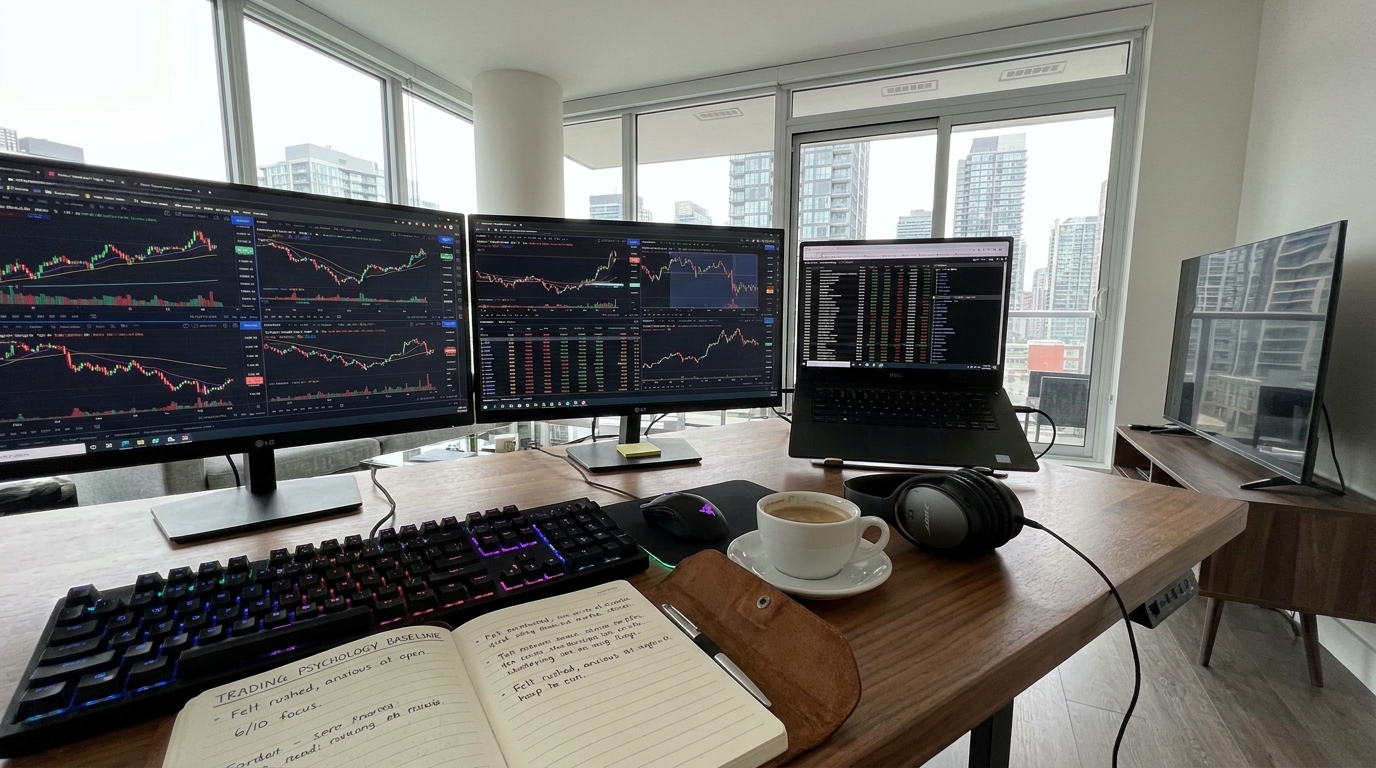
Start logging emotions with every trade: Before you can get useful AI insights, you need data. For the next 20 trades, write down your emotional state before entry. Keep it simple: confident, anxious, bored, frustrated, or eager.
Identify your worst trading times: Look at your last 50 trades and note the time of day for your biggest losses. You'll likely see patterns that an AI coach would flag — but you can spot the obvious ones yourself.
Create predetermined responses to emotional states: Right now, decide what you'll do when you notice you're "frustrated" or "eager to recover." Maybe it's reducing position size by half, or taking a 15-minute break. Having the plan ready prevents emotional decision-making in the moment.
Key takeaways
- Manual emotional logging before trades creates the data foundation that makes AI pattern recognition valuable
- Focus on correlation insights ("When impatient, losses are 32% larger") rather than predictive claims
- Implement predetermined responses to flagged emotional states instead of making decisions in the moment
- Track behavioral consistency metrics like revenge trading frequency, not just P&L improvements
- Use AI insights as one decision factor integrated with existing risk management rules